With Instructor Anthony Von der Muhll, L.Ac., DAOM, DNBAO, FAIPM
[purchase_link id=”19046″ text=”8 Distance-learning NCCAOM PDAs approved $229 – Add to Cart” price=”0″ XSSCleaned=”button”]
Contact us to request CAB CEUs
[purchase_link id=”13697″ text=”E-Book Subscription (No CEUs/PDAs) $30 – Add to Cart” price=”0″ XSSCleaned=”button”]
[siteorigin_widget class=”SiteOrigin_Premium_Widget_Mirror_Widget”][/siteorigin_widget]
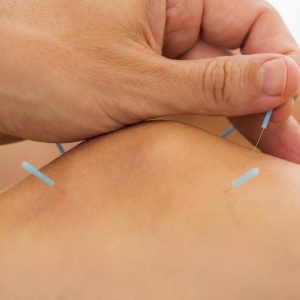
This foundational class provides essential knowledge, skills and protocols to treat a wide range of orthopedic injuries and disabilities with myofascial trigger point and joint stabilization/mobilization needling.
Muscle tension and underlying joint dysfunctions are frequent but often hidden causes of chronic pain and disability. Learn specialized physical exams that lead directly to modern needling techniques with ancient roots to reduce painful myofascial trigger points and restore normal functioning of the muscles and joints of the spine and extremities. Students take home practical methods and strategies, including:
Fundamentals of Orthopedic Acupuncture
- Yin and yang of muscle, tendon and joint anatomy & kinesiology
- Indications and special contraindications, cautions, and safety for orthopedic acupuncture
- Patient education and informed consent
- Specialized practitioner training and skill development for orthopedic acupuncture
- History and physical exam techniques to identify myofascial trigger points and joint mobility/stability dysfunctions
- Mechanisms and therapeutic effects of orthopedic acupuncture
- Red flags for serious muscle and joint injuries
Treating the Yang: Myofascial Trigger Point Acupuncture
- Ahshi points and the jingjin (“sinew meridians” or myofascial tracts)
- Beyond “ahshi points:” specialized methods for locating and treating myofascial trigger points, using tennis elbow as a clinical example
- Recommended muscles and safety considerations for applications of myofascial trigger point acupuncture
- Learn needling and safety techniques for clinically-significant and commonly-injured muscles/tendons of the spine & extremities, including:
- Head, neck, arms: digastric, upper trapezius, levator scapula, sternocleidomastoid, scalenes, supraspinatus, subscapularis, supinator
- Low back and torso: iliopsoas, quadratus lumborum, abdominals
Treating the Yin: Joint Stabilization and Mobilization with Ligamentous or “Prolo-” Acupuncture
- Understanding joint injuries and their sequelae: the degenerative cascade
- Specialized inspection and palpation techniques for joints and ligaments
- Joint active and passive range-of-motion and end-feel examinations
- Needling safety and techniques for hyPERmobile and hyPOmobile joints, including;
- Shoulder, arm and hand: acromio- and sterno- clavicular, glenhumeral, ulnar- and radio- carpal; radio-ulnar; thumb CMC, MCP joints
- Lower leg: knee ACL, MCL, LCL, meniscii, superior tib-fib; ankle anterior talofibular and calcaneofibular joints
- Spine: cervical and lumbar facets; supraspinous, interspinous, iliolumbar, sacroiliac, and sacrotuberous ligaments
- Post-treatment joint re-assessment for immediate verification of outcomes
[siteorigin_widget class=”SiteOrigin_Premium_Widget_Mirror_Widget”][/siteorigin_widget]